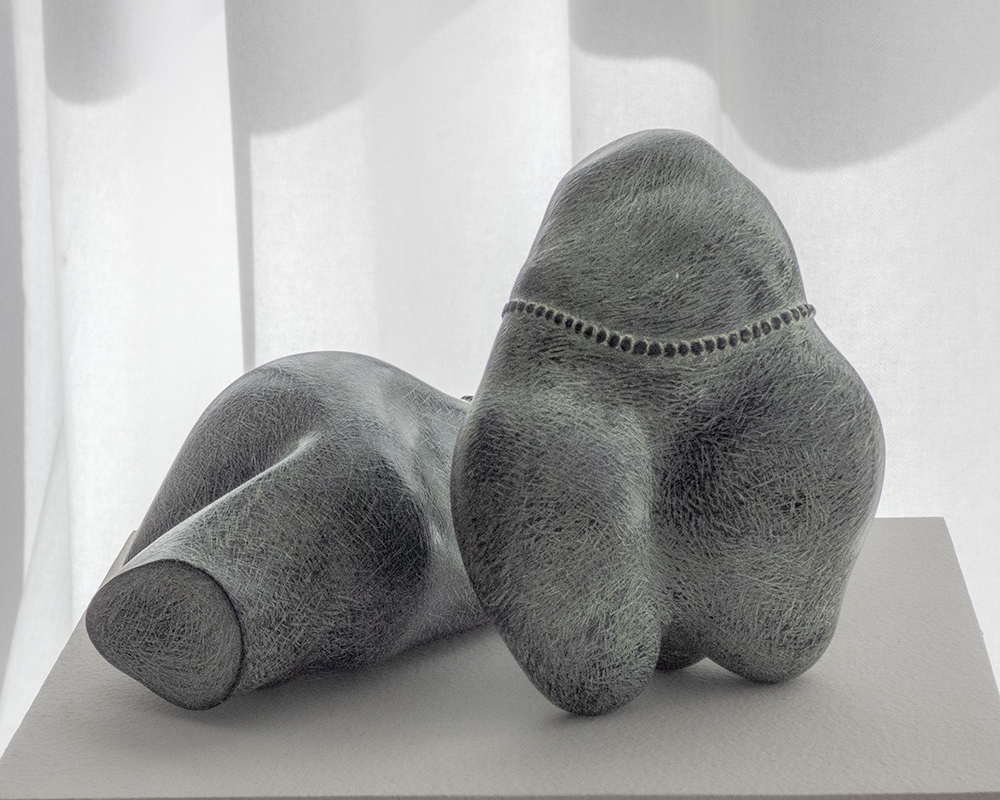
Hedone and Hedone Alter are two sculptures in the round, slowly carved from Indian black soapstone. Through their rounded volumes and tactile surfaces, the sculptures evoke ambiguous bodily forms and suggest pleasure, enjoyment, and delight as physical experiences that resist fixed identities. Their presence, weight, and texture invite intimate touch and a bodily response, inhabiting an ambiguous space between familiarity and strangeness. They invite an encounter with pleasure as something tactile and instinctive, inseparable from the experience of being embodied.
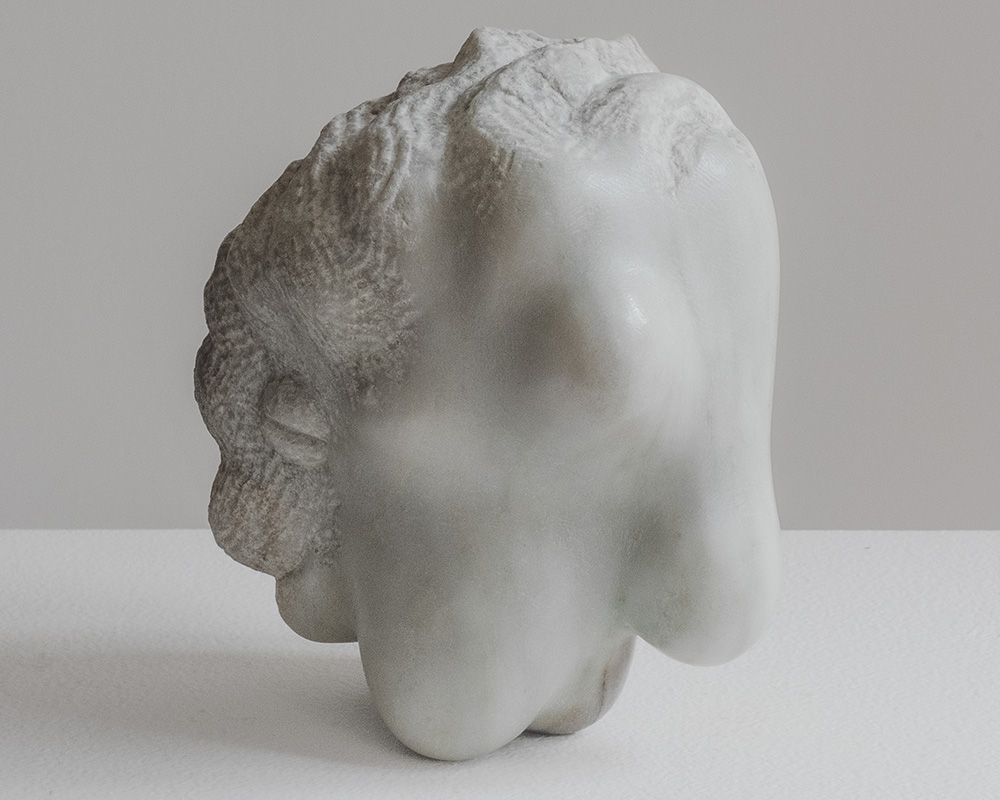
Carved this summer in the Italian Alps, Pilot of the Soul is a primordial, instinctive presence suspended between psychological and existential dimensions. The small, compact marble sculpture has rounded, organic forms that protrude outward, with soft, smooth surfaces, while roughly carved areas retain traces of the carving process.
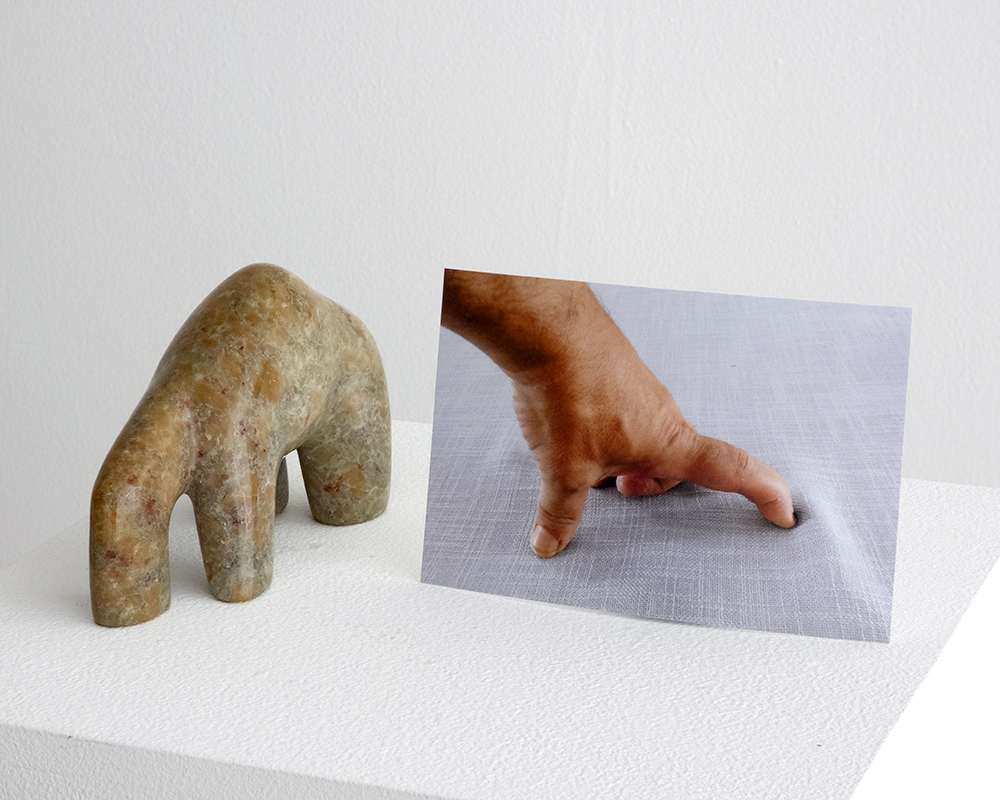
Neither fully animal nor abstract, the sculpture and accompanying photograph propose posture as a mode of thinking. Mirroring the sculpture’s ambiguous stance, the artist’s hand momentarily becomes animal-like, suggesting that the boundary between human and animal is
neither fixed nor essential, but enacted through gesture. Balancing creature, object, and gesture, Quasi-Animal inhabits a space where recognition remains deliberately unresolved.
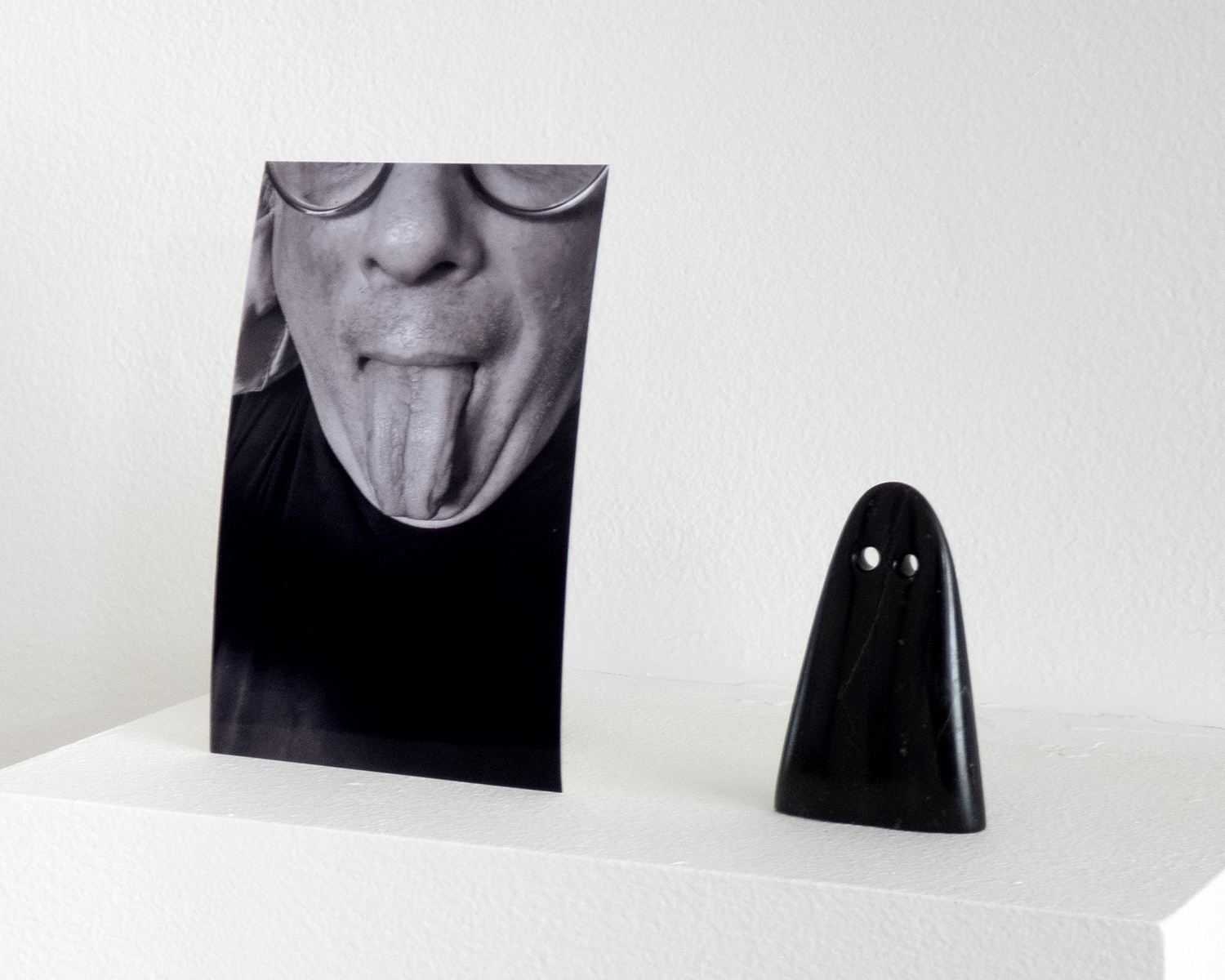
A carved soapstone form and a photograph of the artist extending his tongue confront one another through resemblance rather than representation. The sculpture hovers between face, mask, ghost, and body, while the photograph offers an unmistakably human gesture that is at once playful, abject, and strangely impersonal. Neither image explains the other; instead, each appears as a transformation of the other.
The work takes its title from Georges Bataille’s assertion that “each thing seen is the parody of another, or is the same thing in a deceptive form.” Rather than proposing an original and its copy, Same Thing suggests that identity is produced through continuous displacement. Stone and flesh, object and body, portrait and sculpture become equivalent without ever coinciding, each existing as the other’s deceptive form.
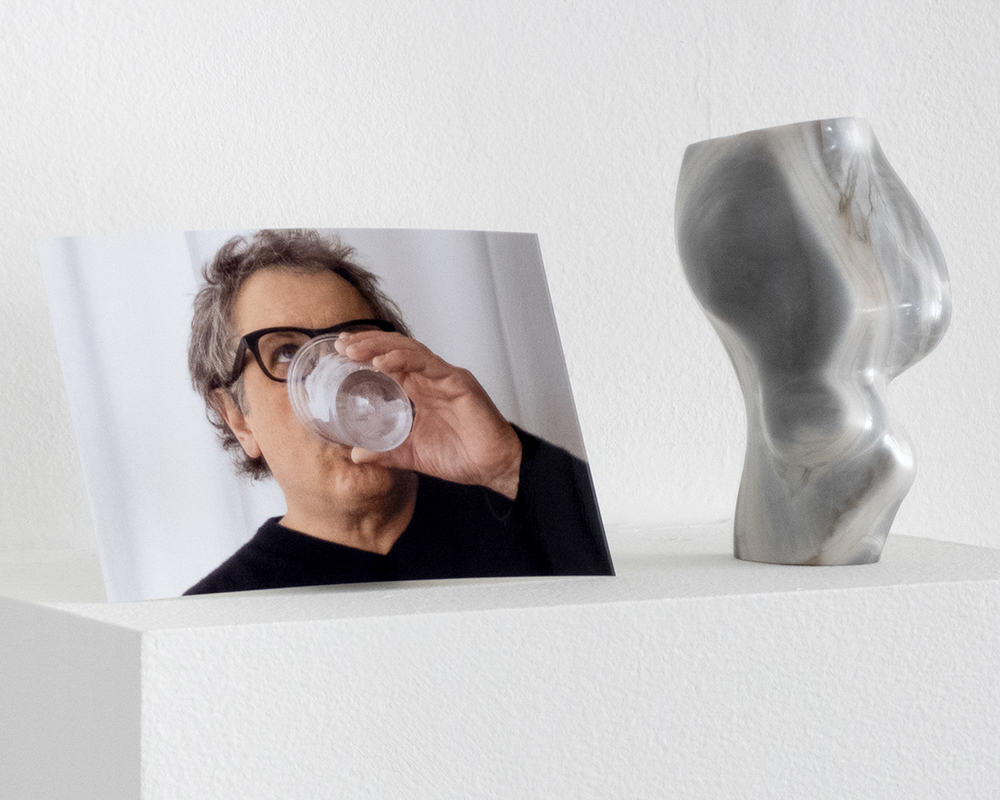
Drawing on the ancient clepsydra, this work shifts time from measurement to embodiment, holding flow in a state of material stillness. A photograph of the artist drinking a glass of water accompanies a carved onyx form whose undulating contours evoke liquid arrested in stone.
Together, the fleeting gesture in the image and the geological presence in the sculpture propose that time is not merely measured by the passage of water, but lived through the body’s continual exchange with it.
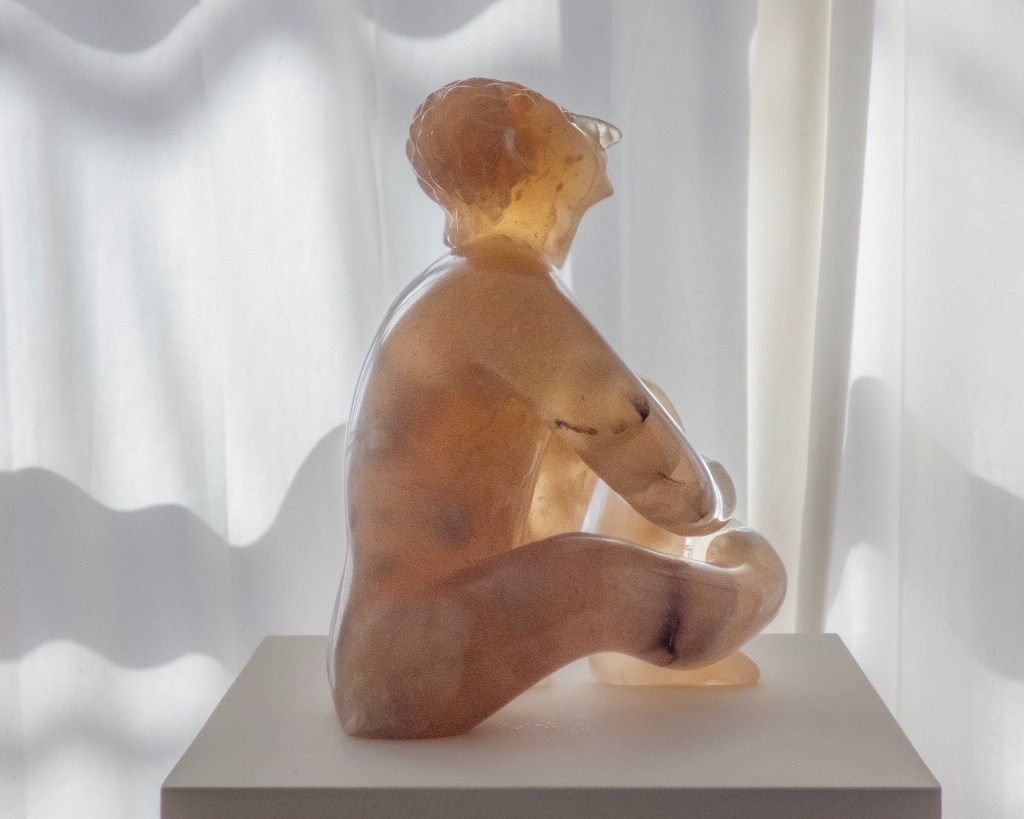
Carved from translucent Italian agate, Ut Sol… appears to contain light rather than merely reflect it. The seated figure turns upward in a gesture of quiet attention, as though receiving an invisible force that permeates both stone and body.
Georges Bataille described the sun as the archetypal gift: *”The origin and essence of our wealth are given in the radiation of the sun, which dispenses energy—wealth—without any return. The sun gives without ever receiving.”*¹ Ut Sol…imagines the body as one of the sun’s countless recipients, absorbing daylight and releasing it from within. Rather than possessing light, the sculpture inhabits it, performing the very generosity Bataille attributes to the sun: an uninterrupted passage of energy from one form into another. It becomes a meditation on abundance, gratitude, and the continuous gift that makes life possible.
¹ Georges Bataille, The Accursed Share: An Essay on General Economy, Vol. I: Consumption, trans. Robert Hurley (New York: Zone Books, 1988), 28.
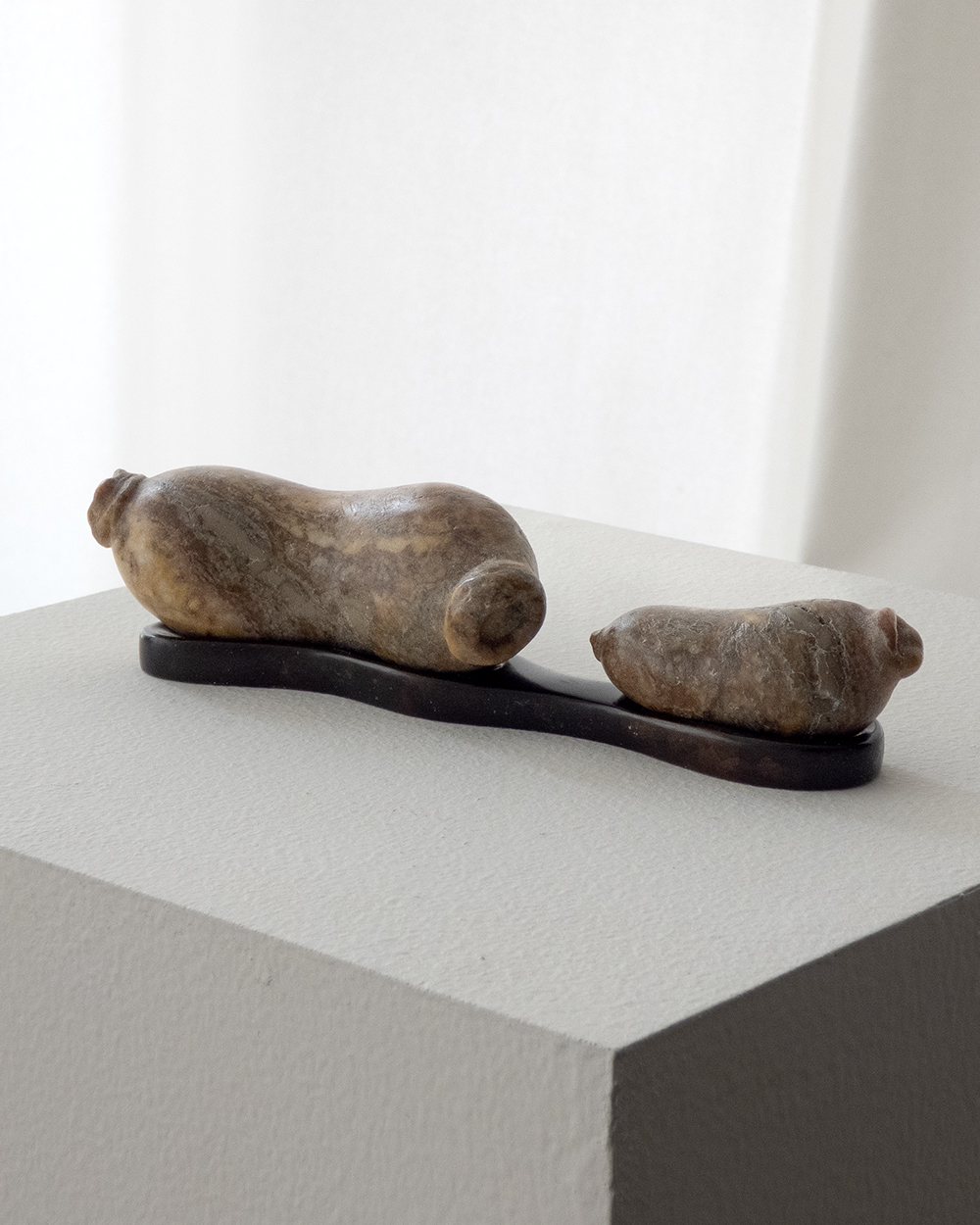
GilbertsculptoriumGeorgiliform (2020) New golden alabaster and patinated bronze: L. 15.5 cm. – 6.1 in.
Shit as first sculpture, as a foundational act.
GilbertsculptoriumGeorgiliform designates sculpture as a primary bodily production in which waste is not metaphor but origin, preceding intention, authorship, and culture.
Form is inevitable. Sculpture occurs.

