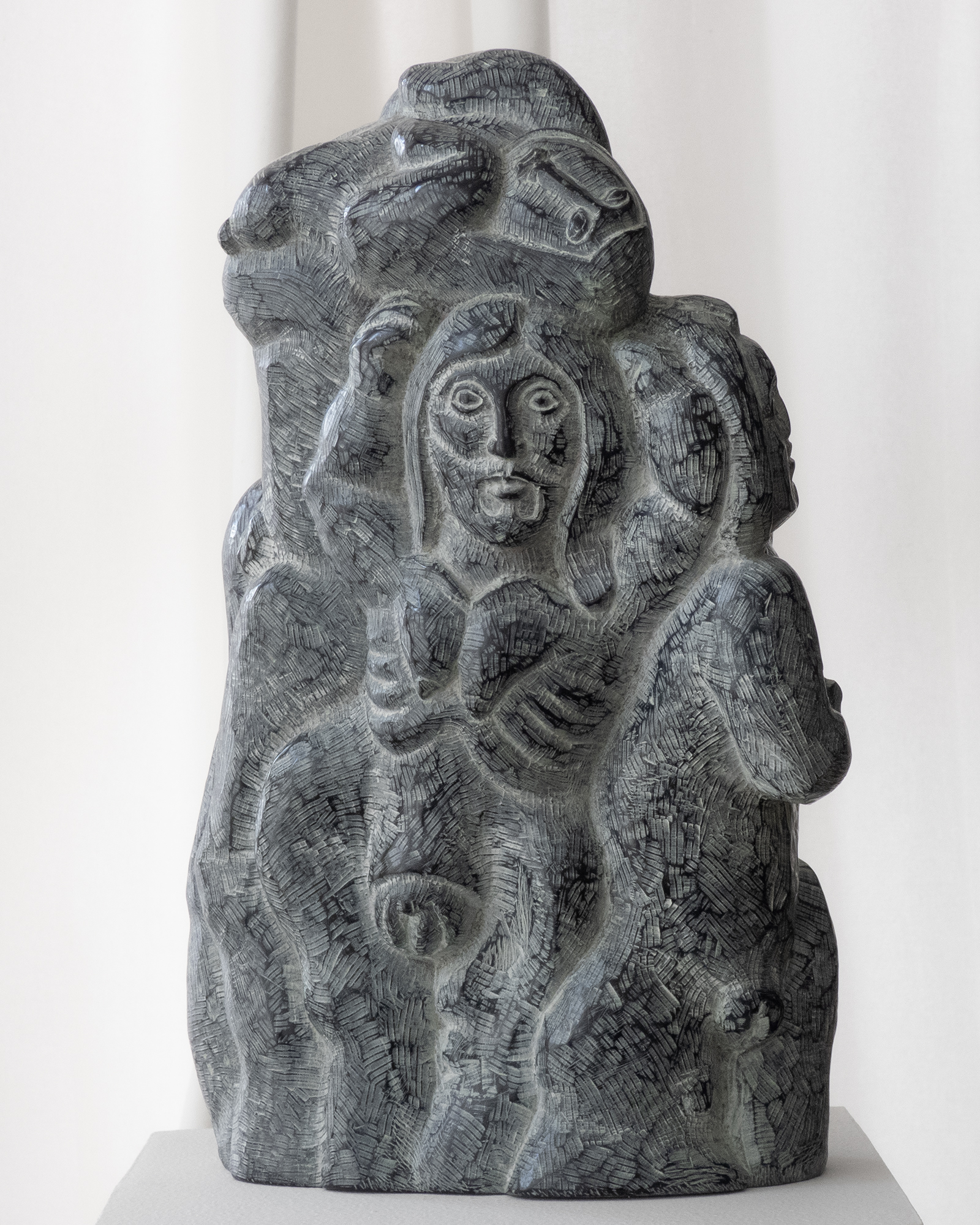
(Some) One in a Sack (2025) Black Indian Soapstone: H. 34 cm – 13.4 in.
In (Some) One in a Sack, the act of carving becomes a gradual articulation rather than a declaration. The figures—bundled, almost wrapped—suggest a single body that is also plural. The title reinforces this ambiguity: someone or some-one, possibly many, held together in a sack that is at once protective and constraining.
The figures do not appear all at once; they surface hesitantly, as if negotiated through resistance. Faces, limbs, and torsos emerge in the round and recede, caught between visibility and concealment, never fully released from the mass that contains them.
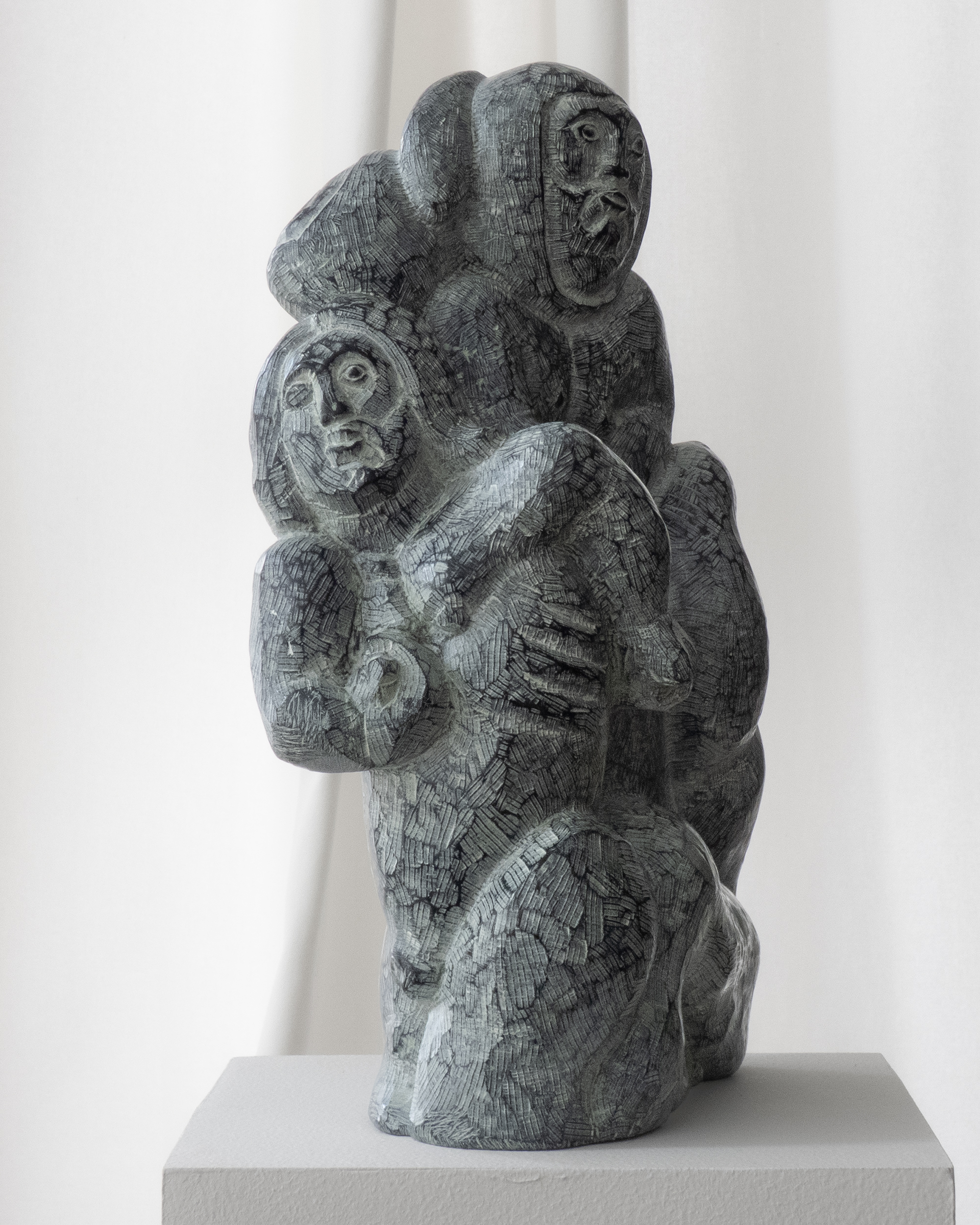
These sculptural “fantasies” speak most clearly through what might be called a provincial, poor plastic dialect. The forms resist refinement or academic fluency; instead, they rely on a reduced, earthy vocabulary—closer to pre-literary, popular Romance languages than to a polished, standardized idiom. Like those early spoken tongues, the sculpture communicates through compression, repetition, and approximation. Meaning is carried by weight, pressure, and proximity rather than clarity or resolution.

The work occupies a space where image and matter remain inseparable: where the figure is not imposed upon the stone, but slowly coaxed from it, speaking in a rough, local language that precedes elegance and survives without translation.
 Paolo Piscitelli